MS/HS. Matter and Energy in Organisms/Ecosystems

Undefined

No food without agriculture

CienciaPR Contribution: 
No
By: 
Pedro Bosque Pérez / pedro.bosque@gfrmedia.com

Puerto Rico only produces 15% of the food it consumes, which represents a threat to the archipelago's food security.


The original version of this article is in Spanish. You can read it by clicking on ESPAÑOL at the top right corner of your screen.

An Analysis of Arthropod Interceptions by APHIS-PPQ and Customs and Border Protection in Puerto Rico

An Analysis of Arthropod Interceptions by APHIS-PPQ and Customs and Border Protection in Puerto Rico

DAVID A. JENKINS, RUSSELL F. MIZELL, III, SKIP VAN BLOEM, STEFANIE WHITMIRE, LEYINSKA WISCOVITCH, CRYSTAL ZALESKI, AND RICARDO GOENAGA


Scientists find 800 year-old cojoba remains on Taino artifacts

Archaeological starch grains consistent with those produced and stored in modern cojoba (Anadenanthera peregrina) seeds were identified, for the first time in the West Indies, in a coral milling base recovered in a small precolonial habitation site of Eastern Puerto Rico, in a context dated to A.D. 115–1250. Ethnohistoric, ethnographic, and previous archaeological data on cojoba from the West Indies and South America were surveyed in order to form plausible sociocultural interpretations of the findings.

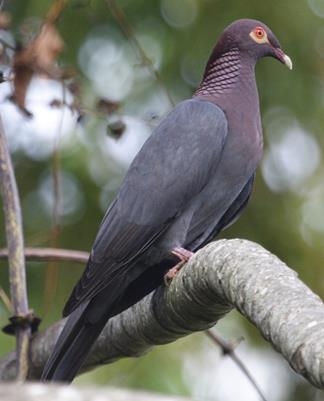
Protecting the scaly-naped pigeon

The scaly-naped pigeon (Patagioenas squamosa) is threatened by hunting in the Caribbean. At present, the pigeon is abundant in Puerto Rico, but overharvesting is a major concern; therefore, the development of a sustainable harvest strategy is a management priority. The management objective of the harvest strategy is to maximize hunting opportunity while keeping the population above an abundance threshold (NT) of 260,000 pigeons.

Searching for a solution for sigatoka

CienciaPR Contribution: 
The Professional is a member of CienciaPR

Bananas and plantains are a staple in the Puerto Rican and many other tropical countries' diets. These crops are affected by the sigatoka, a disease caused by two species of fungus (Mycosphaerella musicola and Mycosphaerella fijiensis) that slowly kill these plants.

The millennial travels of a gecko

CienciaPR Contribution: 
The Professional is a member of CienciaPR
By: 
Wilson Gonzalez-Espada

Tener evidencia del pasado es esencial para preservar la cultura humana. La evidencia del pasado puede ser guardada en formato digital o en formato análogo; mediante fotografía o árboles genealógicos. Sin embargo, estas herramientas suelen ser poco útiles si queremos explorar nuestra historia hace siglos o milenios atrás.

Eddie N. Laboy Nieves: Respecting the Environment

Eddie Laboy-Nieves
Dr. Eddie Laboy Nieves has dedicated his life to studying and educating others about Puerto Rican nature

As a restless and hardworking child, the words spoken by “grandpa” Don Andrés became Eddie’s life compass: “We need to take care of the land and the rivers; without them the poor cannot eat or drink.” Inspired by this message of love for nature, Dr. Eddie N. Laboy Nieves recognized the importance of preserving the environment, leading him to invest his time and career to understand it and to teach others about nature.

His beginnings in science

Nueva mirada a las ‘invasiones’

CienciaPR Contribution: 
The Professional is a member of CienciaPR
By: 
Wilson González-Espada / Especial El Nuevo Día

Un concepto que se observa en diferentes campos del conocimiento es el de paradigma. Un paradigma establece lo que se asume como correcto o básico en una disciplina. Son estos axiomas los que nos ayudan a interpretar las cosas desde un punto de vista u otro. Existen paradigmas en áreas tan diversas como la economía, las artes, la sociología y las ciencias.

Pages

Subscribe to RSS - MS/HS. Matter and Energy in Organisms/Ecosystems