MS. Growth, Development, Reproduction of Organisms

Undefined

Use of technology to teach students with Autism

CienciaPR Contribution: 
No
By: 
Pedro A. Menéndez Sanabria

Teacher Bryan Rivera developed the project Sense around Bakery Club for Autism Learners for students ages 11 and 13 with support form the Department of Education.

To read the full article, visit the Spanish version of this site.

The origin of a dengue epidemic

CienciaPR Contribution: 
The Professional is a member of CienciaPR

This article describes the recent article about dengue genetics published in Science by Dr. Mariano García Blanco and his colleagues at Duke University.


To read the full article, visit the Spanish version of this site.


The Science article could be found at: http://www.sciencemag.org/content/early/2015/07/01/science.aab3369.abstract


Summer biomedical research program for high school and middle school students

CienciaPR Contribution: 
No

The Biomedical Research Education Program (BREP) of the University of Puerto Rico (UPR) Medical Sciences Campus (MSC) held its Annual Biomedical Summer Internships for middle and high school students during the month of June.  Twenty three (24) Middle School students and twenty eight (27) High School students from three different educational districts participated in the internships. 

Shark that is part of an experiment swims to Puerto Rico

CienciaPR Contribution: 
No
By: 
Pedro Bosque Pérez

A shark that has been monitored was recently track swimming in the south of Puerto Rico. Researchers at Nova Southeastern University’s Guy Harvey Research Institute (GHRI) announced that “St. Mary’s”, shark's name, was escaping the cold temperatures and was swimming in the Caribbean waters.  


Spreading false hopes about stem cell treatments

CienciaPR Contribution: 
The Professional is a member of CienciaPR

Recently, several interviews in Puerto Rico have spread misinformation about the use of stem cells for the treatment of several conditions, such as paralysis.

In this article, Wilson González Espada advises readers to inform themselves about FDA regulations on stem cell treatments.

The original version of this article is in Spanish. You can read it by clicking on ESPAÑOL at the top right corner of the screen.


No food without agriculture

CienciaPR Contribution: 
No
By: 
Pedro Bosque Pérez / pedro.bosque@gfrmedia.com

Puerto Rico only produces 15% of the food it consumes, which represents a threat to the archipelago's food security.


The original version of this article is in Spanish. You can read it by clicking on ESPAÑOL at the top right corner of your screen.

FDA Warns About Stem Cell Claims

Stem cell therapies offer the potential to treat diseases or conditions for which few treatments exist.

Stem cells, sometimes called the body’s “master cells,” are the precursor cells that develop into blood, brain, bones and all of your organs. Their promise in medical treatments is that they have the potential to repair, restore, replace and regenerate cells that could then be used to treat many medical conditions and diseases.

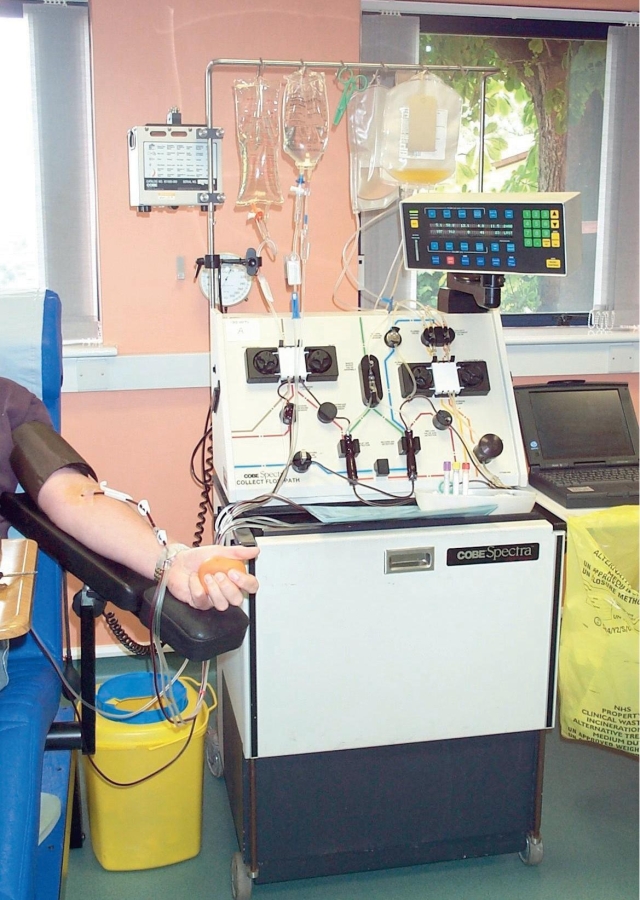
Therapeutic aphaeresis: Experience in Puerto Rico

Therapeutic aphaeresis: Experience in Puerto Rico

Raúl H. Morales Borges, Gladys Colón Nieves, María Rodríguez Martínez, Rosa Vargas Ramos, Linda I. Pedraza Otero, Carmen Nieves Vargas, Glorimar Ortiz Pedraza, Jairo J. Morales Jiménez, Clinical Services, American Red Cross, Puerto Rico Region, United States

Can medications discriminate based on genetics?


A group of researchers from University of Puerto Rico, including Karla Claudio, Dr. Jorge Duconge and Dr. Carmen Cadilla, advance the field of pharmacogenetics by researching how different genetic mutations help or hinder the metabolization of warfarin.


This article is available in Spanish.


Pages

Subscribe to RSS - MS. Growth, Development, Reproduction of Organisms