MS/HS. Interdependent Relationships in Ecosystems

Undefined

Technological innovation at the service of the environment: Quebradillas cobitos find refuge in 3D shells

CienciaPR Contribution: 
No
By: 
Olivia Carmen Maule

Quebradillas - On the beaches of this municipality, hermit crabs face a silent dilemma: there are not enough shells to protect their soft bodies. Faced with scarcity, many resort to pieces of trash as shelter. Now, a scientific and community initiative is turning to an unexpected tool to address the crisis: shells made with 3D printers.

Polytechnic students create novel twill-based filament for 3-D printers

CienciaPR Contribution: 
No
By: 
José Ayala Gordián

A group of chemical engineering students at the Polytechnic University of Puerto Rico seeks to revolutionize the emerging field of 3D printing by developing a novel sargassum-based filament, which would not only allow the manufacture of all kinds of products for consumers, but would also give a use to the tons of this seaweed that congests the coasts of the island and that, in the future, could create a new economic sector and jobs.

Puerto Rico close to a massive coral reef loss

CienciaPR Contribution: 
No
By: 
Gerardo E. Alvarado León

Due to the warming ocean temperatures, coral reefs around Puerto Rico have been under stress for more than 7 weeks in a row, which could provoke a massive bleaching event after October 27. If this bleaching occurs there could be negative effects of unknown magnitude to fishing, recreational and tourism industries. 

You can read the full version of this article in Spanish by clicking on ESPAÑOL at the top right of your screen.

Latina professors find an interdisciplinary way to teach about microbiology, hurricanes, colonialism and politics

CienciaPR Contribution: 
No

By: Dr. Wilson Gonzalez-Espada, Ciencia Puerto Rico


At first look, history and microbiology may seem disciplines with nothing in common. However, two Latina faculty members at the College of the Holy Cross, in Worcester MA, vehemently shattered the perceived boundaries between these disciplines to provide their students with a unique and long-lasting learning experience.

Insectos y cambio climático: Impacto sobre la Seguridad Alimentaria

Los insectos desempeñan funciones cruciales tanto en los ecosistemas naturales como los agrícolas. No sería una exageración decir que sin la polinización por parte de los insectos, la humanidad se vería en serios problemas para producir comida. Cerca del 35% de los alimentos que consumimos dependen de la intervención de los insectos. Pero algunas especies pueden producir daños severos a la agricultura. Se estima que más de 10,000 especies producen daños a plantas que los humanos utilizamos. Ya sea por sus múltiples beneficios o perjuicios, los insectos son un factor clave para la seguridad alimentaria de la humanidad, es por esto que debemos entender como el cambio climático impactara en estos organismos.

ZIka vaccines might arrive too late

CienciaPR Contribution: 
No
By: 
Agencia EFE

Ginebra - The World Health Organization (WHO) warned today that the vaccine against Zika virus might arrive to late to have a real impact on the current epidemic going on in Latin America.

For the full article, please refer to the spanish version of this site.
 

An Analysis of Arthropod Interceptions by APHIS-PPQ and Customs and Border Protection in Puerto Rico

An Analysis of Arthropod Interceptions by APHIS-PPQ and Customs and Border Protection in Puerto Rico

DAVID A. JENKINS, RUSSELL F. MIZELL, III, SKIP VAN BLOEM, STEFANIE WHITMIRE, LEYINSKA WISCOVITCH, CRYSTAL ZALESKI, AND RICARDO GOENAGA


Searching for a solution for sigatoka

CienciaPR Contribution: 
The Professional is a member of CienciaPR

Bananas and plantains are a staple in the Puerto Rican and many other tropical countries' diets. These crops are affected by the sigatoka, a disease caused by two species of fungus (Mycosphaerella musicola and Mycosphaerella fijiensis) that slowly kill these plants.

Eddie N. Laboy Nieves: Respecting the Environment

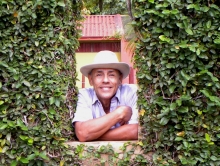
Eddie Laboy-Nieves
Dr. Eddie Laboy Nieves has dedicated his life to studying and educating others about Puerto Rican nature

As a restless and hardworking child, the words spoken by “grandpa” Don Andrés became Eddie’s life compass: “We need to take care of the land and the rivers; without them the poor cannot eat or drink.” Inspired by this message of love for nature, Dr. Eddie N. Laboy Nieves recognized the importance of preserving the environment, leading him to invest his time and career to understand it and to teach others about nature.

His beginnings in science

Pages

Subscribe to RSS - MS/HS. Interdependent Relationships in Ecosystems