Science News

Collaborations with various media allow us to create a bank of science news of relevance to the Puerto Rican and Hispanic communities and give a venue that our scientific members can use to keep their communities informed and engaged with science.

Also, the news archive can be used as a resource for students and educators

In this section you can find: news written by members of the CienciaPR team and written by other news media and which are reproduced with permission from the original source.

If you want to collaborate with CienciaPR in writing an article, please read this writing and editorial guide and then contact us.

Showing 231 - 240 of 251
To prevent automated spam submissions leave this field empty.

Puerto Rico on the right track of the biosciences future

This article is reproduced by CienciaPR with permission from the original source.

CienciaPR Contribution: 

The Professional is a member of CienciaPR
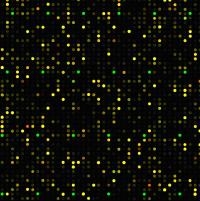
The study of genomic expression –the translation of the DNA’s information that ultimately leads to the production of protein that carry out cellular function- offers information about how a cell works and how it responds to its needs and its environment. This requires sophisticated tools, expertise and facilities that are at the forefront of technology. Puerto Rico has one of these facilities, unique in its class, at the University of Puerto Rico, Rio Piedras Campus: the Functional Genomics Research Core. For more information you can visit Sandra Peña de Ortíz or Michelle Martínez Montemayor's CienciaPR profile. *This article is part of our ongoing collaboration with El Nuevo Dia

Understanding the brain's mysteries

This article is reproduced by CienciaPR with permission from the original source.

CienciaPR Contribution: 

The Professional is a member of CienciaPR
Learning and Memory are fascinating brain phenomena that go hand in hand. Learning is the process of acquiring knowledge through experience; it produces memory, which is defined as the brain’s ability to retain and retrieve information. Recently three groups of Puerto Rican investigators publish back-to-back papers on their studies related to learning and memory in the December issue of the scientific peer reviewed journal, Learning & Memory. This article is part of our successful collaboration with El Nuevo Dia. For more information about the investigators that did these studies, visit this month’s spotlight in our main page or visit their CienciaPR profiles.

Pluto visits a psychologist

This article is reproduced by CienciaPR with permission from the original source.

CienciaPR Contribution: 

The Professional is a member of CienciaPR
Pluto’s recent demotion to a dwarf planet has caused it an identity crisis. At least the scientific scrutiny that made it go from a planet to a dwarf planet lead scientists to discover Pluto has two other moons… Wilson González Espada, Assistant Professor at Arkansas Tech University and CienciaPR member presents Pluto’s story –about how an intense scientific debate took him out of the list of planets in our Solar System- in a fun way.

Important to be an informed patient

This article is reproduced by CienciaPR with permission from the original source.

CienciaPR Contribution: 

The Professional is a member of CienciaPR
It is important to follow the instructions of any medications we are taking, but we don’t always understand the medical jargon associated to them. According to studies, old people and those who don’t know how to read or write are more at risk to make mistakes with their medications. Another group at risk is the people who take a lot of medicines or consult several doctors for different health conditions. It is important to: Talk to your doctor about all the drugs you are taking, including supplements and over-the-counter medications. Confirm what your doctor said with your pharmacist of choice. Read the labels carefully. *This article is part of our collaboration with El Nuevo Dia

Poultry might be a target for avian flu

This article is reproduced by CienciaPR with permission from the original source.

CienciaPR Contribution: 

The Professional is a member of CienciaPR
Avian flu has been news for its outbreaks in Asian countries. The HN51 virus is spread from bird to bird and form bird to human, and so far has infected 173 people, 54% of which have died. There is a possibility that the virus might mutate, allowing it to spread from person to person like the common flu does, which will cause a serious public health problem. According to a study done by researchers in Iowa, an easy way to prevent the spread of this an other common viruses, is to wash your hands frequently, specially after touching or handling poultry or birds.

Glacier water reaches the Island

This article is reproduced by CienciaPR with permission from the original source.

CienciaPR Contribution: 

The Professional is a member of CienciaPR
The melting of the artic glaciers is one of the effects of global warming. Although the loss of the ice is occurring far away from Puerto Rico, the absence of glaciers in the Island does exclude it from the effects of global warming. This, because the atmosphere, the oceans, rocks and life are interconnected systems, that are very sensitive to changes among them. The melting of the Greenland and Antarctica glaciers could cause the water level to raise 0.5 to 2 meters in next century. This will bring a string of consequences like the increase of coastal flooding and erosion, and an increase in the frequency and intensity of storms and hurricanes. Also economical activities, like tourism, fishing, and agriculture, among others, could be affected. We can still diminish the effects of global warming if we act now. By conserving energy in our homes, work places and transport we can reduce carbon dioxide emissions produce by the use of fossil fuel. A lot of countries have taken measures to reduce their greenhouse gases emissions. Puerto Rico doesn’t have to be the last to do this, and contribute to the benefit of our planet and society.

Sierra Bermeja: accounts of our history

This article is reproduced by CienciaPR with permission from the original source.

CienciaPR Contribution: 

The Professional is a member of CienciaPR
Sierra Bermeja is a mountain range south of the Lajas valley, between the municipalities of Cabo Rojo and Lajas in southwestern Puerto Rico, where the oldest rocks in Puerto Rico, and some of the oldest in the Caribbean, can be found. The kinds of fossils and rocks found in Sierra Bermeja gives us a clue of the geological origins of our Island. Besides having a great geological value, Sierra Bermeja has other treasures, important for our national patrimony. Several species of endangered birds and plants live there. Also, some Indian settlement remains have been found there, including tools made of flint.

Urgent to eliminate trans fat

This article is reproduced by CienciaPR with permission from the original source.

CienciaPR Contribution: 

The Professional is a member of CienciaPR
A recent study published in Harvard University’s Nutrition Journal suggests that eliminating trans fats from food reduces the risk of a heart attack. According to epidemiological studies, consuming this kind of fat, even in small amounts (2 to 7 grams a day, or 20 to 60 calories a day) increases significantly the risk of a having a heart attack. Moreover, consuming this fat is associated with neurological disorders, risk of type II diabetes and developmental problems of the fetus during pregnancy, among other things currently under investigation. In spite of the overwhelming scientific evidence, and that it has been confirmed that trans fat can be eliminated from food without largely altering the flavor or price of food, not a lot has been accomplished. *This article is part of our collaboration with El Nuevo Dia.

Nanotechnology moving forward

This article is reproduced by CienciaPR with permission from the original source.

CienciaPR Contribution: 

The Professional is a member of CienciaPR
Nanotechnology is present in many of the things we use everyday. However, according to a study published in Nature recently, 69% of the population knows little or nothing about nanotechnology. In this article, part of our collaboration with El Nuevo Dia, Wilfredo Ortiz, collaborator and CienciaPR member, talks about the importance of this discipline and knowing about it.

The "Bio-Island" faces fierce competition

This article is reproduced by CienciaPR with permission from the original source.

CienciaPR Contribution: 

The Professional is a member of CienciaPR
We have heard a lot about biosciences and the knowledge-based economy, but, what does this really mean for Puerto Rico? CienciaPR, in collaboration with El Nuevo Dia, analyzes the proposals for the advancement of biosciences in Puerto Rico and its potential impact in the Puerto Rican society.

Tags: 

Pages

Subscribe to Noticias