Science News

Collaborations with various media allow us to create a bank of science news of relevance to the Puerto Rican and Hispanic communities and give a venue that our scientific members can use to keep their communities informed and engaged with science.

Also, the news archive can be used as a resource for students and educators

In this section you can find: news written by members of the CienciaPR team and written by other news media and which are reproduced with permission from the original source.

If you want to collaborate with CienciaPR in writing an article, please read this writing and editorial guide and then contact us.

Showing 3721 - 3730 of 4054
To prevent automated spam submissions leave this field empty.

Iguaca is the name for the new home of the Puerto Rican parrot

This article is reproduced by CienciaPR with permission from the original source.

The new home for the Puerto Rican parrot has a name: Iguaca. This is the name that our Taino Indians used for this endangered bird. The Fishing and Wild Life Service held a contest so the public could choose a name for the new bird house in Rio Grande, and the name Iguaca won by receiving 50% of the 1,950 votes.

Workshop on Research Opportunities

This article is reproduced by CienciaPR with permission from the original source.

The Workshop on Research Opportunities, coordinated by Dr. Jannette Gavillán-Suarez, will take place on March 27, 2007 at the University of Puerto Rico in Cayey. This workshop will talk about how to write a good personal statement and curriculum vitae, among other subjects; students will talk about their research experiences; and our page CienciaPR will be presented to the academic community.

Innovation applicable in the Island

This article is reproduced by CienciaPR with permission from the original source.

In a recent trip to North Carolina, United Status, a group of trustees from the Science, Technology and Research Trust of Puerto Rico visited the Research Triangle Park and the North Carolina Biotechnology Center, with the purpose of learning about the strategies of these important research and development centers and try to apply them in Puerto Rico. Among the most important lessons learned: the need to integrate entrepreneurship courses to college curriculums in science and biotechnology; the recruitment of professors and scientists from Puerto Rico and the world; the vitality of strengthening science education in K-12 grades; to promote the creation of new biotechnology companies making venture capitalism easier; and to continue training the existing workforce in bioprocesses.

Tags: 

Puerto Rico to observe the Research Triangle Park

This article is reproduced by CienciaPR with permission from the original source.

A delegation from the Science, Technology and Research Trust of Puerto Rico traveled to North Carolina to learn more about the famous Research Triangle Park (RTP), the biggest research and development zone in the United States. Luis E. Rodríguez Rivera, executive director of the Trust, hopes to learn how a similar project can be established in San Juan. Puerto Rico hopes to establish the Knowledge Corridor which, like the RTP, would be a zone aimed to produce valuable knowledge, particularly in the research and development of new products for international markets.

Tags: 

The Puerto Rican nightjar: Master of camouflage

This article is reproduced by CienciaPR with permission from the original source.

The Puerto Rican nightjar, an endemic species of Puerto Rico, lives in the southeast of our Island and it is known for its camouflage feathers that blend with the dead leaves on the ground of the forests it inhabits. Even with its camouflaging strategy, the loss of its habitat and the introduction of exotic mammals (the Indian mongoose in particular) have pushed the Puerto Rican nighjar to the verge of endangerment.

Urgently needed documentation of our caves

This article is reproduced by CienciaPR with permission from the original source.

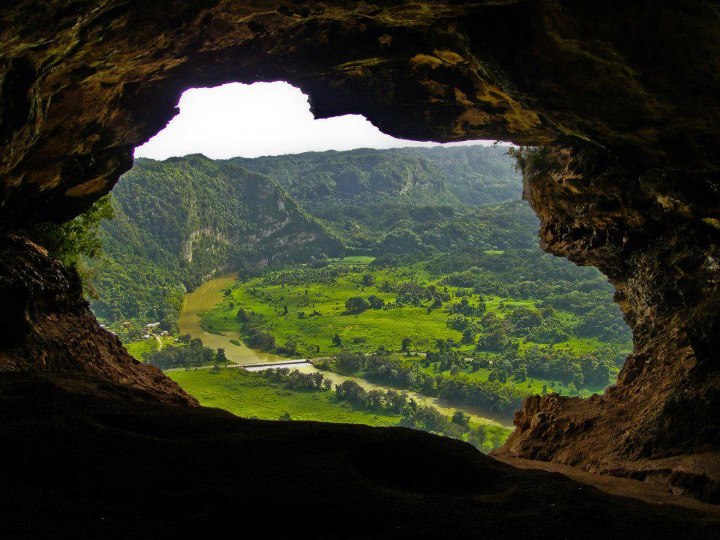
It is estimated that there are several thousand caves in Puerto Rico, but only 700 are known and of those just 30 are formally documented. Julio Rodríguez Planell, president of the Speleological Society of Puerto Rico understands that the documentation process is expensive, dangerous and hard but extremely necessary for the scientific world and the conservation of caves.

Nothing to fear of in caves

This article is reproduced by CienciaPR with permission from the original source.

There are many fears in our collective imagination associated to the popular concept of caves that drive us to have a natural instinct of staying away from them. These fears are founded in the fact that caves can be a hostile environment for humans because they are dark, humid, cold, have a high relative heat, they are like labyrinths, have multiple levels and irregular floors; they can be enclosed and have water currents, vertical drops and unstable surfaces,” explained Julio Rodriguez Planell, president of the Speleological Society of Puerto Rico. Also people are fearful of many of the creatures that live in this environment like bats, rats, spiders, crickets, scorpions and roaches. Unfortunately, because of these myths and fears, caves are the most underestimated and scorned natural resource in the Island.

UPR's microbiologist recieves award

This article is reproduced by CienciaPR with permission from the original source.

Dr. Adelfa Serrano, researcher and professor at the Medical Sciences Campus of the University of Puerto Rico gave the “Dr. Arturo L. Carrión Honorary Lecture”, instituted by Puerto Rican Society of Microbiology. The invitation to the conference was in recognition to her work in microbiology, specifically the study of malaria.

Pages

Subscribe to Noticias