Science News

Collaborations with various media allow us to create a bank of science news of relevance to the Puerto Rican and Hispanic communities and give a venue that our scientific members can use to keep their communities informed and engaged with science.

Also, the news archive can be used as a resource for students and educators

In this section you can find: news written by members of the CienciaPR team and written by other news media and which are reproduced with permission from the original source.

If you want to collaborate with CienciaPR in writing an article, please read this writing and editorial guide and then contact us.

Showing 221 - 230 of 251
To prevent automated spam submissions leave this field empty.

Analogy between species and language evolution

This article is reproduced by CienciaPR with permission from the original source.

CienciaPR Contribution: 

The Professional is a member of CienciaPR
In spite of all the scientific evidence available, many people still do not consider biological evolution as a fact in the planet’s history. Part of this is due to the difficulty in understanding the time and space scales related to evolution, which are extremely wide. One analogy that might help us understand how things change throughout thousands of years is language evolution. This article is part of our collaboration with El Nuevo Dia.

Biosensors: medicinal future

This article is reproduced by CienciaPR with permission from the original source.

CienciaPR Contribution: 

The Professional is a member of CienciaPR
A biosensor is a material that has a biological component that identifies the presence of an analyte, which is whatever you are interested in studying or measuring. A typical biosensor is formed by three parts: a biological element (an enzyme or protein that reacts with the analyte), a medium where both compounds can associate, and a detection element that detects the analyte to be studied. A very common example of a biosensor is the strips used by diabetics to measure their blood sugar levels. This article is part of our collaboration with El Nuevo Dia.

Important victory in the fight against dengue

This article is reproduced by CienciaPR with permission from the original source.

CienciaPR Contribution: 

The Professional is a member of CienciaPR
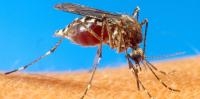
Unfortunately there is no vaccine or cure for dengue, so the most effective way to control the disease is managing the populations of Aedes aegypti, the mosquito that transmits it. But this has proven to be a difficult task. But thanks to genetics, the fight against dengue has scored an important victory: the sequence of the Aedes aegypti genome, published in June in the prestigious Science magazine. This article is part of CienciaPR’s collaboration with El Nuevo Dia.

Believable explanations

This article is reproduced by CienciaPR with permission from the original source.

CienciaPR Contribution: 

The Professional is a member of CienciaPR
In a trial, evidence is essential. In our Justice System, an individual is considered and found guilty only if there is sufficient and plenty of evidence against him. In science, evidence is very important too. But evidence is not always easy to find. When lacking evidence, we should use William de Occam’s -a priest from the XIV century with much interest in logic and science- advice. He suggested that we should, at least temporarily, while we gather evidence, the explanation that requires the least amount of suppositions. This article is part of CienciaPR’s collaboration with El Nuevo Día.

Science: opening, breaking and grinding

This article is reproduced by CienciaPR with permission from the original source.

CienciaPR Contribution: 

The Professional is a member of CienciaPR
Kids can make the best scientists. They see something new and they tirelessly ask what, how, and why. Sometimes scientists behave like curious children, and when there is no other way to study an important phenomenon, they recur to the old habit of opening, breaking and grinding things to see what’s inside and how nature’s objects work. Of course, this “destruction” is careful and controlled so that the pieces are not damaged and can be studied. This article is part of our collaboration with El Nuevo Día.

The Metabolic Syndrome

This article is reproduced by CienciaPR with permission from the original source.

CienciaPR Contribution: 

The Professional is a member of CienciaPR
The Metabolic Syndrome is the medical name given to a range of metabolic changes and their clinical effects. Multiple scientific studies demonstrate that people who suffer this condition are 5 times more prone to develop diabetes and 2 or 3 times more likely to suffer a heart attack. For more information about this and other heart related conditions visit www.corazonhispano.blogspot.com. This article is part of our collaboration with El Nuevo Dia.

Scientists need to improve their communication skills

This article is reproduced by CienciaPR with permission from the original source.

CienciaPR Contribution: 

The Professional is a member of CienciaPR
In controversial issues, such as global warming and the evolution of species, science has serious communication problems. These controversies make evident the need to improve the communication skills between scientists and the general public. This article, part of our collaboration with El Nuevo Día, discusses the need for scientists to articulate their ideas and results to inform the general public and those involved in decision making.

Coffee: dark, strong... and toxic?

This article is reproduced by CienciaPR with permission from the original source.

CienciaPR Contribution: 

The Professional is a member of CienciaPR
Coffee is essential for the morning for many Puerto Ricans, not only for its taste and aroma, but for the caffeine it contains that takes away sleepiness and makes us feel alert. However, depending on various environmental factors, coffee beans (and other grains, like cereals and dry fruits) can contain another ingredient: a potentially deadly toxin. They are known as ochratoxins and they are mainly produced by fungi in the Aspergillus and Penicillium genus. This article, part of our collaboration with El Nuevo Día, talks about this “ingredient”, unknown to many of us.

Pregnancy seems to soothe MS symptoms

This article is reproduced by CienciaPR with permission from the original source.

CienciaPR Contribution: 

The Professional is a member of CienciaPR
Multiple sclerosis (MS) is a neurological disease that destroys myelin –an adipose layer that surrounds nerve fibers and gives name to the “white matter” of our nervous system. A study done by scientists at the University of Calgary in Canada, published recently in the Journal of Neuroscience, demonstrated that during pregnancy there is an increase in myelin production, due to the proliferation of the cell that produce myelin in the nervous system, known as oligodendrocites. The oligodendrocite proliferation seemed to be promoted by prolactin, a hormone which main function is to stimulate breast milk production, so its levels are high during pregnancy. *This article is part of our collaboration with EL Nuevo Dia

The brain controls every action

This article is reproduced by CienciaPR with permission from the original source.

CienciaPR Contribution: 

The Professional is a member of CienciaPR
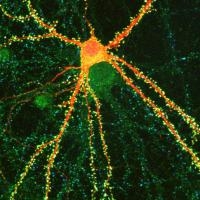
Neuroscience is the study of the nervous system, which includes the brain, the spinal cord and the networks of sensory neurons throughout our body. It’s a multidisciplinary science that integrates biology, chemistry, and physics with the study of the nervous system’s structure, its physiology, behavior, emotions and cognitive functions. There are scientists that study the development of the nervous; neuroanatomists study its structure and organization. Some study cognitive processes, like visual perception and memory and others study processes underlying behavior. Other neuroscientists study the computational aspects of the brain. Some dedicate to study the clinical aspect of neuroscience, investigating the causes, effects and possible treatments for diseases like Parkinson, Alzheimer and schizophrenia, among many others. Meanwhile, molecular neuroscientists see the brain as a group of neurons that are composed of genes, proteins and molecules, vital for neuronal function. Puerto Rico has a large variety of these scientists. Our Island has a rich neuroscience community, having an Institute of Neurobiology in Old San Juan, next to El Morro. Also, the Schools of Medicine in Ponce, the University of Puerto Rico and the Universidad Central del Caribe; and the University of Puerto Rico in Mayaguez and Rio Piedras are home to Puerto Rico’s neuroscientists. *This article is part of CienciaPR's collaboration with El Nuevo Dia

Pages

Subscribe to Noticias